
 SEOAI IntegrationSocial Media MarketingWebsite DevelopmentContent MarketingLocal SEOLead Generation
 Build a Stronger Local Presence with SEO
At VexoTouch Web Solutions, we help small businesses improve local visibility with effective Local SEO strategies. From Google Business Profile optimization and local keywords to reviews and location-based content, our approach helps businesses attract nearby customers and grow their presence in local search.
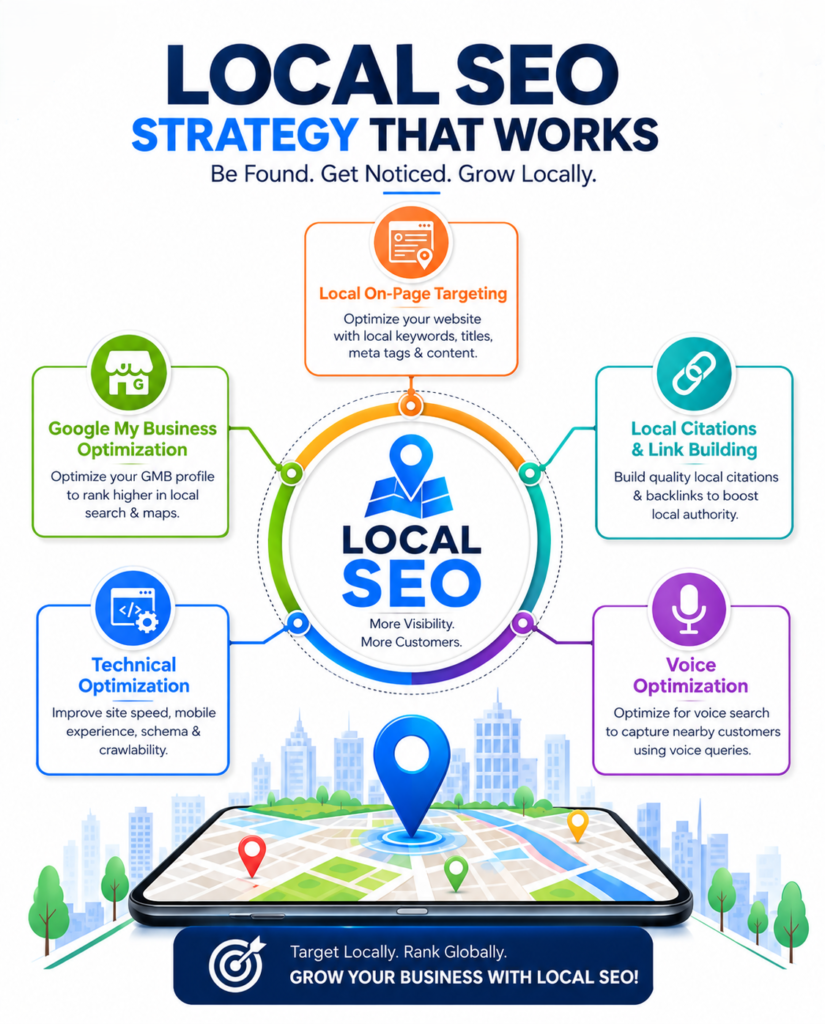
Local SEO Checklist for Small Businesses: 25 Steps to Rank in Google Maps
Written by the SEO team at VexoTouch Web Solutions, a digital agency that helps local businesses grow online across Australia, the UK and India.
When someone searches "dentist near me" or "plumber in Leeds", they are ready to act. If your business does not show up, that customer calls your competitor instead. A clear local SEO checklist fixes this by showing you exactly what to do, and in what order.
In this guide, you will learn how Google ranks local results, which 25 tasks matter most, and how to avoid the mistakes we see on small business websites every week. You will also get a country-by-country comparison and a simple 30-day plan.
Table of Contents
- What Is Local SEO and Why Does It Matter?
- How Google Ranks Local Results
- The Complete Local SEO Checklist
- Google Business Profile Optimisation (Steps 1-8)
- Website and On-Page Local SEO (Steps 9-15)
- Local Citations and Directories (Steps 16-19)
- Reviews and Reputation (Steps 20-22)
- Local Links and Technical Basics (Steps 23-25)
- Local SEO in Australia, the UK and India
- Common Local SEO Mistakes
- Your 30-Day Local SEO Plan
- Frequently Asked Questions
- Conclusion
What Is Local SEO and Why Does It Matter?
Local SEO is the process of optimising your online presence so your business appears in Google Maps, the local pack and location-based searches. It helps nearby customers find your address, phone number, reviews and services at the moment they are ready to visit or call.
The "local pack" is the group of three businesses shown with a map at the top of many searches. Appearing there puts your phone number, directions and star rating in front of ready-to-buy customers.
Local SEO suits any business that serves a specific area:
- Shops, cafés and restaurants with a physical location
- Clinics, salons and gyms that people visit in person
- Service-area businesses such as electricians, cleaners and movers
- Professional firms such as accountants, lawyers and consultants
Unlike general SEO, a local SEO checklist focuses on proximity, trust and real-world details. That is why a small bakery can outrank a national chain for a search in its own suburb.
How Google Ranks Local Results
Google ranks local results using three main factors: relevance, distance and prominence. Relevance is how well your profile matches the search. Distance is how far you are from the searcher. Prominence is how well known your business is, based on reviews, links and mentions across the web.
Google explains these three factors in its own guidance on improving your local ranking. Every item in our local SEO checklist supports at least one of them.
Relevance
Relevance means your business clearly matches what the person typed. Choose the right categories, describe your services in plain words, and make sure your website covers each service on its own page.
Distance
You cannot change where a searcher is standing. You can, however, make your location and service areas accurate and consistent so Google can place you correctly.
Prominence
Prominence is your reputation online. Genuine reviews, quality mentions from local websites, and a well-built website all add to it. This is the factor you can improve most over time.
The Complete Local SEO Checklist
A local SEO checklist covers six areas: Google Business Profile, consistent business details, local on-page content, citations, reviews and technical basics. Work through them in that order. Fix your profile and details first, because every other step builds on accurate, consistent information about your business.
Do not try to finish everything in a weekend. Complete one section, check the results, then move on. Steady progress beats a rushed job every time.
Google Business Profile Optimisation (Steps 1-8)
To optimise your Google Business Profile, claim and verify it, choose the most accurate primary category, add your hours, services and service areas, upload real photos, and keep everything updated. Complete, accurate profiles give Google clearer signals and give customers the confidence to call or visit.
Your Google Business Profile is the single most important item on any local SEO checklist. Follow Google's guidelines for representing your business closely, because breaking them can get a profile suspended.
- Claim and verify your profile. Search for your business, then follow the prompts to verify by the method Google offers.
- Use your real business name. Do not add keywords or locations to the name. This is against the guidelines.
- Pick the best primary category. A Melbourne electrician should choose "Electrician", not a broad term like "Contractor".
- Add secondary categories only where they truly describe what you do.
- Write a clear business description. Explain what you do, who you help and where, in natural language.
- Add services, products and opening hours. Update special hours for public holidays.
- Upload real photos. Include your storefront, team, work and interior. Avoid stock images.
- Post updates regularly. Share offers, news and projects so the profile stays active.
Service-Area Businesses
If you travel to customers, hide your home address and list the suburbs, towns or cities you serve. Keep the list realistic, as a very long list of areas you do not truly cover can look spammy.
Website and On-Page Local SEO (Steps 9-15)
Your website should confirm everything your Google Business Profile says. Show your business name, address and phone number (NAP) clearly, build a page for each service and location, and write for real customers. Consistent details across your site and profile build trust with both people and search engines.
- Keep NAP details identical everywhere. "Street" and "St" count as different spellings to a strict system, so choose one format and stick with it.
- Put your NAP in the header or footer of every page, using a clickable phone number for mobile users.
- Write a title tag and H1 for each page that includes the service and the place, such as "Emergency Plumber in Manchester".
- Create one page per core service. Avoid cramming all services onto a single page.
- Create location pages only if you truly serve those areas. Each needs unique content, such as local examples, projects and team details, not a copy-and-paste template.
- Embed a Google Map on your contact page and add directions from nearby landmarks or stations.
- Add local proof. Show case studies, customer stories, awards and community involvement.
A Practical Example
Imagine a Leeds bakery that sells wedding cakes. Instead of one generic "Our Cakes" page, it builds a "Wedding Cakes in Leeds" page with photos from real weddings at named venues, price guidance, and a booking form. That page is more relevant, more useful and more likely to rank.
Help AI Search Understand You
Tools like Google's AI-powered results and chat-based assistants pull from clear, well-structured pages. Short direct answers, accurate details and consistent information help them understand your business. If you want expert support here, our AI search optimisation service is built for exactly this.
Local Citations and Directories (Steps 16-19)
Local citations are mentions of your business name, address and phone number on other websites, such as directories and industry listings. They help Google confirm your details are real and consistent. Aim for accuracy over volume: a few correct, relevant listings beat hundreds of messy ones.
- List your business on the main platforms for your country, including Bing Places and Apple Business Connect.
- Add industry-specific directories, such as legal, medical or trade associations.
- Audit existing listings for old addresses, old phone numbers and duplicates.
- Fix or merge duplicates. Duplicate listings split your reputation and confuse customers.
Reviews and Reputation (Steps 20-22)
Ask every happy customer for a Google review, reply to all reviews politely, and never buy or fake them. Google states that more reviews and higher ratings can improve local ranking, and real feedback also helps new customers decide whether to trust you.
- Create a direct review link and share it by SMS, email, invoice or a QR code at your counter.
- Ask at the right time, right after a job is done well or a purchase is completed.
- Reply to every review. Thank positive reviewers by name, and answer negative ones calmly with a clear next step.
Never offer discounts or payment in exchange for reviews, and never ask only happy customers to leave feedback. Both practices can breach Google's policies.
Local Links and Technical Basics (Steps 23-25)
- Earn local links. Sponsor a local sports team, join the chamber of commerce, share expert comments with local news sites, or partner with nearby businesses.
- Add LocalBusiness schema markup to your website so search engines can read your details clearly. Follow Google's local business structured data guide.
- Make your site fast and mobile-friendly. Most local searches happen on phones, so test your pages on a real handset.
If your website is slow, outdated or hard to use on mobile, a rebuild may bring bigger gains than any listing. Our website development team builds fast, search-ready sites for small businesses.
Local SEO in Australia, the UK and India
The core local SEO checklist is the same everywhere, but directories, address formats and customer habits differ by country. Use the table below as a starting point, and always check which listings are most relevant in your industry.
| Factor | Australia | United Kingdom | India |
|---|---|---|---|
| Commonly used directories | True Local, Yellow Pages Australia, Hotfrog | Yell, FreeIndex, Thomson Local | Justdial, Sulekha, IndiaMART (B2B) |
| Address style | Suburb, state and 4-digit postcode | Town and postcode | Area, city and PIN code, often with landmarks |
| Search habits | Suburb-level searches and "near me" | Town, postcode and "near me" | City or area searches, often mixing English with Hindi or regional languages |
| Phone format | +61 or local area code | +44 or local area code | +91, often with WhatsApp contact |
| Content tip | Mention suburbs and council areas you serve | Mention towns, boroughs and nearby landmarks | Mention localities, landmarks and consider multilingual pages |
Common Local SEO Mistakes
Most local SEO problems come from inconsistency and shortcuts. Fix these first, because they quietly hold back otherwise good work.
- Inconsistent business details. Different phone numbers or old addresses across listings weaken trust.
- Keyword-stuffed business names. This breaks Google's guidelines and risks suspension.
- Copy-and-paste location pages. Swapping only the town name adds no value.
- Ignoring reviews. Unanswered feedback signals that nobody is paying attention.
- Choosing the wrong category. A vague category makes you relevant for fewer searches.
- Setting up once and forgetting. Hours change, services change and competitors keep improving.
Your 30-Day Local SEO Plan
You can complete the essentials of this local SEO checklist in about a month with a few hours each week. Use this schedule as a simple guide.
- Week 1: Claim and complete your Google Business Profile. Collect your correct NAP details in one document.
- Week 2: Update your website with consistent NAP details, service pages and a map. Add schema markup.
- Week 3: Audit and fix citations. Create listings on the main directories for your country.
- Week 4: Launch a review-request routine, post your first updates and start local link outreach.
How to Measure Results
Track calls, direction requests and website clicks in your Google Business Profile performance data. Add Google Analytics and Google Search Console to your site to see which local searches bring visitors. Review the numbers monthly and note what changed.
Frequently Asked Questions
What is a local SEO checklist?
A local SEO checklist is a step-by-step list of tasks that help your business appear in Google Maps and local search results. It covers your Google Business Profile, consistent contact details, local website content, citations, reviews and technical fixes, so you can improve visibility without guessing what to do next.
How long does local SEO take to work?
Many small businesses see early movement within two to three months, but results depend on competition, your starting point and how consistently you work. Profile fixes and new reviews can help quickly, while links and content take longer. Treat local SEO as ongoing work, not a one-off project.
Do I need a website to rank in Google Maps?
You can appear in Google Maps with only a Google Business Profile, but a website gives you a real advantage. It adds relevant content, builds trust, and gives Google more information to understand your services and location. For competitive searches, a fast, helpful local website is strongly recommended.
How many local citations do I need?
There is no magic number. Start with the major platforms for your country, plus a few relevant industry and local directories. Make sure your name, address and phone number match exactly everywhere. Twenty to thirty accurate listings are a sensible starting point for most small businesses, then add more only if they are relevant.
Can I do local SEO without a physical shop?
Yes. Service-area businesses such as plumbers, cleaners and consultants can rank by hiding their home address on Google Business Profile and listing the suburbs or cities they serve. Create location-specific service pages on your website, and encourage honest reviews from customers in those areas.
Does Google Ads help local SEO?
Google Ads do not directly improve your organic or Maps rankings. However, local ads can bring immediate visibility while your SEO grows. Many businesses run both: ads for quick leads and local SEO for steady, lower-cost traffic over time. Start with SEO if your budget is limited.
How do I get more Google reviews?
Ask at the right moment, right after a successful job or purchase. Share your direct Google review link by SMS, email or a QR code at your counter. Reply to every review. Never offer payment for reviews or review-gate customers, because both break Google's policies and can put your profile at risk.
Conclusion: Put This Local SEO Checklist to Work
Local search rewards businesses that are accurate, active and trusted. Start with your Google Business Profile, keep your details consistent, build helpful local pages, earn genuine reviews and fix your technical basics. Each step in this local SEO checklist makes it easier for nearby customers to find you and choose you.
If you would rather have experts handle it, VexoTouch Web Solutions offers local SEO services, SEO, digital marketing and website development tailored to local markets in Australia, the UK and India. Contact us today for a friendly, no-pressure conversation about growing your business online.
VexoTouch Web Solutions
Email: admin@vexotouchwebsolution.com
WhatsApp: +91 8436156774
Follow us: Instagram | X (Twitter) | Facebook | Pinterest

Need More Local Customers?
Boost your local visibility, reach nearby customers, and grow your business with proven Local SEO strategies. Contact VexoTouch Web Solutions today via WhatsApp or email and take the first step toward better local rankings.